
Need a Chaldean NAATI Interpreter or Translator ?
Click Below for a Free Quote!
Securing professional Chaldean interpreting and translating services in certain areas of Australia can be quite challenging due to the scarcity of NAATI certified Chaldean interpreters within the country. At Worldwide Interpreting and Translation, we have established long-standing, positive relationships with these interpreters, enabling us to provide the highest quality Chaldean interpreters available in the state. Worldwide Interpreting and Translation specialises in offering Chaldean interpreters and translators proficient in all dialects.
Our team consists of Australian NAATI certified and court-experienced professionals with extensive knowledge in legal, medical, and specialised domains. They possess expertise in various areas, including criminal and civil matters, employee meetings, engineering, business matters, immigration, and more.
With Worldwide Interpreting and Translation you can access comprehensive Chaldean language services, including interpretation, translation, and transcription, available 24/7, worldwide. Our interpreters and translators are native Chaldean speakers who undergo thorough screening, certification, credentialing, field testing, and continuous education in both English and Chaldean languages.
They stay updated with the latest developments through lectures, conferences, and travel, ensuring their skills remain sharp. Worldwide Interpreting and Translations’ Chaldean interpreters and translators possess profound knowledge of the Chaldean language, as well as its culture and history, enabling them to deliver accurate and culturally sensitive interpretation and translation services.
Who are the Chaldean speakers?
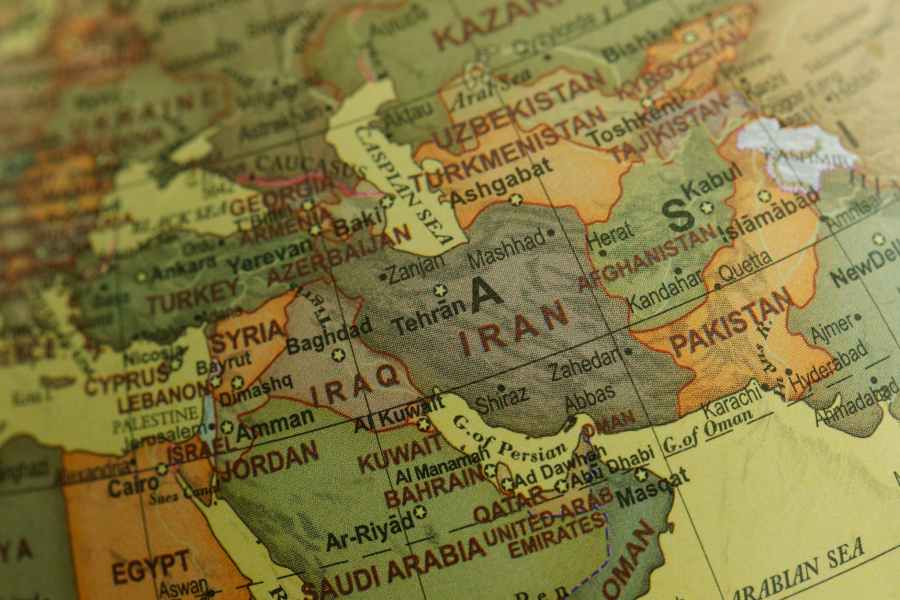
The Chaldean speakers are an ethnic group primarily residing in the historical region of Mesopotamia, encompassing present-day Iraq, south-eastern Turkey, north-eastern Syria, and north-western Iran. They possess a distinct cultural and linguistic identity, with Chaldean Neo-Aramaic being their native language. Descendants of the ancient Chaldean empire, the Chaldeans have a rich history dating back thousands of years. Despite facing challenges and persecution throughout history, many Chaldeans have formed diaspora communities worldwide, particularly in the United States. Their contributions to various fields have enriched the cultural heritage of the regions they inhabit.
About the Chaldean Language
The Chaldean language, also known as Neo-Aramaic or Eastern Aramaic, is a Semitic language that has its roots in ancient Mesopotamia. It is primarily spoken by the Chaldean Christian communities residing in parts of Iraq, Iran, Syria, and Turkey. The Chaldean language belongs to the Aramaic language family, which has a rich history dating back to the first millennium BCE. Historically, Aramaic was widely spoken throughout the Near East and was even the administrative language of the Neo-Assyrian and Neo-Babylonian empires.
Over time, the Chaldean language developed as a distinct dialect within the Aramaic language continuum due to the influence of local cultures and languages in the regions inhabited by Chaldean communities.
Chaldean possesses a unique linguistic identity, characterized by its phonetics, grammar, and vocabulary. It has evolved with regional variations, resulting in different Chaldean dialects such as Tyari, Barwari, and Alqosh. However, despite these dialectal differences, Chaldean speakers can generally understand each other and communicate effectively.
Today, the Chaldean language faces challenges due to geopolitical conflicts, emigration, and the encroachment of dominant languages. Efforts are being made to preserve and revitalise the language through education, literature, and digital resources. Organizations and community initiatives are working towards documenting Chaldean dialects, promoting language awareness, and fostering a sense of cultural identity among Chaldean speakers, ensuring that the linguistic heritage of the Chaldean people endures for future generations.


Request a Free Quote
Let us Assist with your Interpreting or Translation assignment
